
Bipartisan ROAD To Housing Act Axed From National Defense Authorization Act
Originally Published by: National Mortgage Professional — December 8, 2025
SBCA appreciates your input; please email us if you have any comments or corrections to this article.
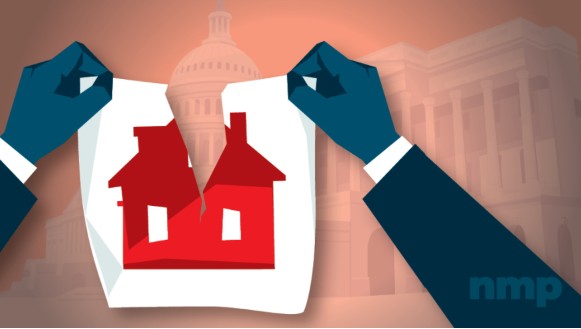
The ROAD to Housing Act — formally known as the Renewing Opportunity in the American Dream (ROAD) to Housing Act of 2025 — did not survive a final negotiation in the House of Representatives on the National Defense Authorization Act (NDAA) and has been removed. The version of the NDAA passed by the House (HR 3838) excludes the ROAD amendment — meaning the comprehensive housing bill was stripped out.
The bipartisan ROAD to Housing Act was introduced by Sen. Tim Scott in the Senate as S. 2651, passed out of the Senate Committee on Banking, Housing, and Urban Affairs unanimously on July 29, 2025. The measure contains 40 distinct provisions covering a broad array of housing policy areas, including housing supply expansion, homeownership, manufactured housing, disaster recovery, rental assistance, program reform, veterans’ housing, rural housing, and program oversight and coordination.
Some of the key policy proposals with the measure include:
What Happened?
As of the final House text released in early December, the defense bill — which remains one of Congress’s few “must-pass” pieces of legislation each year — will move forward without the ROAD provisions. This outcome reflects significant pushback within parts of the House. While the Senate — including leadership on both sides — gave strong bipartisan support for including housing reforms, the inclusion failed in the House, with some lawmakers opting to block the measure.
"We are cautiously optimistic that a major housing package will land on the President's desk early next year," said Isaac Boltansky, head of public policy at Pennymac. "We anticipate the House Financial Services Committee will do thoughtful work to strengthen and expand the Senate-passed ROAD to Housing package, ensuring a strong bipartisan victory that maximizes the breadth and depth of the impact."
The removal of the ROAD to Housing Act from the NDAA is a major blow to housing reform efforts in 2025–2026 because:
- It's a lost opportunity to address the housing crisis now: With growing concerns about continued rising housing costs, rising rents, insufficient supply, and homelessness in many areas, the ROAD to Housing Act offered a comprehensive, multi-pronged federal response. Removing it delays any opportunity to enact wide-reaching housing reforms.
- Regulatory reform and supply constraints postponed: Key components of the bill were aimed at cutting red tape, easing zoning and land-use restrictions, incentivizing new construction, and boosting production of rental and manufactured housing. Striking the ROAD to Housing Act means barriers will continue in building more housing at an affordable scale.
- Affordable housing financing and investment delayed: Provisions such as raising the cap on banks’ public-welfare investments (thus enabling more financing of affordable housing), strengthening tax-credit investments, and broadening access to low-cost mortgages and homeownership programs will not advance — at least for now.
- Vulnerable populations left waiting: Sections aiming to expand rental assistance, preserve and modernize public housing, improve housing production for lower-income households, veterans, rural communities, and disaster-impacted areas may remain untouched — leaving many communities without critical support.
What’s Next On The ROAD To Housing?
Removal from the NDAA does not necessarily spell the end of the ROAD to Housing Act. Due to the fact that the measure passed unanimously in the Senate Committee, and then passed the Senate as part of the NDAA, it shows that the ROAD to Housing Act retains broad bipartisan backing.
As noted by one of its principal sponsors, Sen. Scott, the bill remains a “critical first step” toward expanding supply, cutting red tape, and improving housing affordability nationwide.
“Families across the country are being crushed by soaring housing costs, and Washington cannot continue to sit on the sidelines,” said Sen. Scott. “The White House has made it clear that affordability is a central priority, and the ROAD to Housing Act is one of the most effective first steps to increase housing access, expand supply, and lower costs. ROAD provides the largest housing reform package in more than a decade — cutting red tape, unlocking supply, and helping families achieve the stability and opportunity that come with homeownership.”
Advocates and stakeholders are calling on House leaders and relevant committees (especially those overseeing housing and financial services) to re-introduce the package, or at least its core components, as standalone legislation or attach it to another measure.
And For The Nation’s Homeowners …
For many Americans — renters, prospective homebuyers, families struggling with rising housing costs, and communities facing shortage of affordable housing — the exclusion of the ROAD to Housing Act represents a major setback. The reforms it proposed would have meaningfully addressed housing supply, affordability, homelessness, and access to homeownership.
That said, the story is not over. The bipartisan nature of the bill, its broad support in the Senate, and urgent national housing needs mean there’s still a real chance it could be revived. But, for now, families hoping for immediate relief will need to wait — and maybe press lawmakers to prioritize comprehensive housing reform in 2026.
House Committee on Financial Services Chairman Rep. French Hill (R-AR) noted: “I share the president’s goals of expanding Americans’ access to housing that fits their needs by reducing regulatory roadblocks to development, increasing housing supply and choice, and strengthening accountability. It is critical that we deliver real solutions that empower Americans and strengthen communities. This month, the Financial Services Committee will advance solutions to tackle housing cost and access challenges for American families, homeowners, and renters. Next year, we look forward to working with our Senate colleagues to send a bill to the president’s desk that reflects the views of both chambers and leads to more affordable choices for America’s homeowners and renters.”
- Raising the cap on banks’ public-welfare investments (enabling greater investment in affordable housing);
- Streamlining zoning and regulatory barriers;
- Boosting the production of multifamily and rental housing;
- Modernizing financing and support for manufactured and modular homes;
- Expanding access to homeownership;
- Preserving and expanding rental assistance programs (like making the Rental Assistance Demonstration — RAD permanent and eliminating its cap);
- Improving disaster recovery tools and funding; and
- Simplifying HUD-administered housing and voucher programs.
Advocates for the measure described the legislation as the most significant federal housing legislation in over a decade — a historic, bipartisan attempt to address America’s housing shortage, affordability crisis, and structural regulatory barriers.
“Donald Trump claims he wants to build more housing and lower housing costs, but his allies in the House just axed a bipartisan bill that unanimously passed the Senate to do just that,” said Sen. Elizabeth Warren (D-MA). “The fight to get the ROAD to Housing Act signed into law isn’t over — but if House Republicans continue to block legislation to cut housing costs in 2026, then Democrats will pass it ourselves when we take back Congress."