
Lumber Traders Share Insights on Market Conditions
Originally Published by: HBS Dealer — April 23, 2026
SBCA appreciates your input; please email us if you have any comments or corrections to this article.
It starts with lumber, the basic building material on the ground floor of the vast majority of housing starts and home remodels. But before it gets to the lumber dealer, it goes through the lumber trader, one of the unsung heroes of the hardware and building supply industry.
HBSDealer reached out to a handful of industry pros with a front row seat on this behind the scenes activities of traders And what jumps out is a reverence for the law of supply and demand supplemented with uber technical knowledge and strong people skills.
Risk management
Sherwood Lumber is a wholesale distributor based in Melville, New York. Promotional copy for the company’s Lumber Number newsletter explains the concept relative prices and under-valued items.
“If you are right, you fill-up the sack,” it says. “If you are wrong, you get a chance to get out with your shirt.”
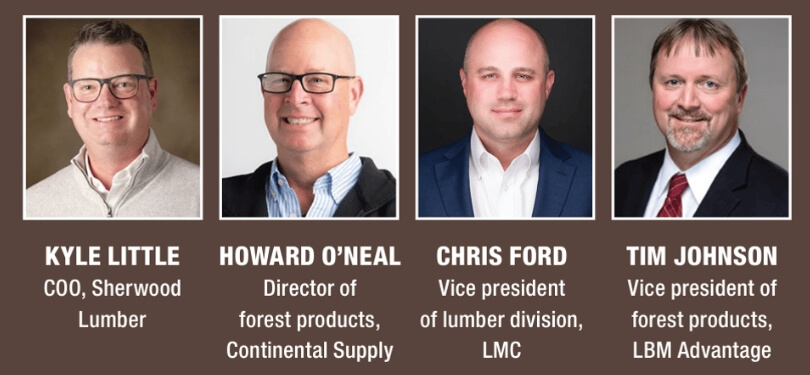
While the above might sound like an ad for Caesars Sportsbook, Kyle Little, COO of the Melville, New York-based Sherwood Lumber, pushed back on the idea that lumber trading is a variant of roll-the-dice gambling.
“Lumber trading isn't really about buying at the cheapest price all the time,” Little told HBSDealer. “It’s about positioning. At the right time, making sure that you have more of something when it's undervalued and there's more opportunity to go up and having less of something when it's overvalued with more risk to the downside.”
“We're not gambling,” said Tim Johnson, VP of forest products at LBM Advantage. “We’re, we're making educated decisions.”
He added that the members of the co-op know what their needs are going to be, and it’s the trader’s job to understand what the member needs and help them cover them “in a way that brings the most value to the member at that point in time in the market.”
Skills of the trade
Chris Ford began his career as an LMC lumber trader in 2005. Now, he’s the leader of LMC/s lumber and logistics team and has about 30 traders under his direction, each with a specialized focus on the various species — Douglas fir, southern yellow pine, European spruce, etc.
“Our thinking is that we like you to specialize in a certain species, rather than try to be an expert in all of them,” he told HBSDealer. “Because each one has its own dynamics.”
But in addition to technical knowledge, lumber trading is a relationship-driven business, and Ford says LMC looks for strong people skills when hiring. On the other end of the phone, businesses are “relying on us to know the lumber market. They’re usually putting a lot of stock into what we’re telling them. Our team is dialed in. They all sit next to each to other and overhear each other—it’s constant communication throughout the day.”
At LBM Advantage, Tim Johnson, describes a similar mindset.
“No matter what you're selling or trading, you have to know your product,” Johnson said.
Border control
That communication is even more critical in turbulent times.
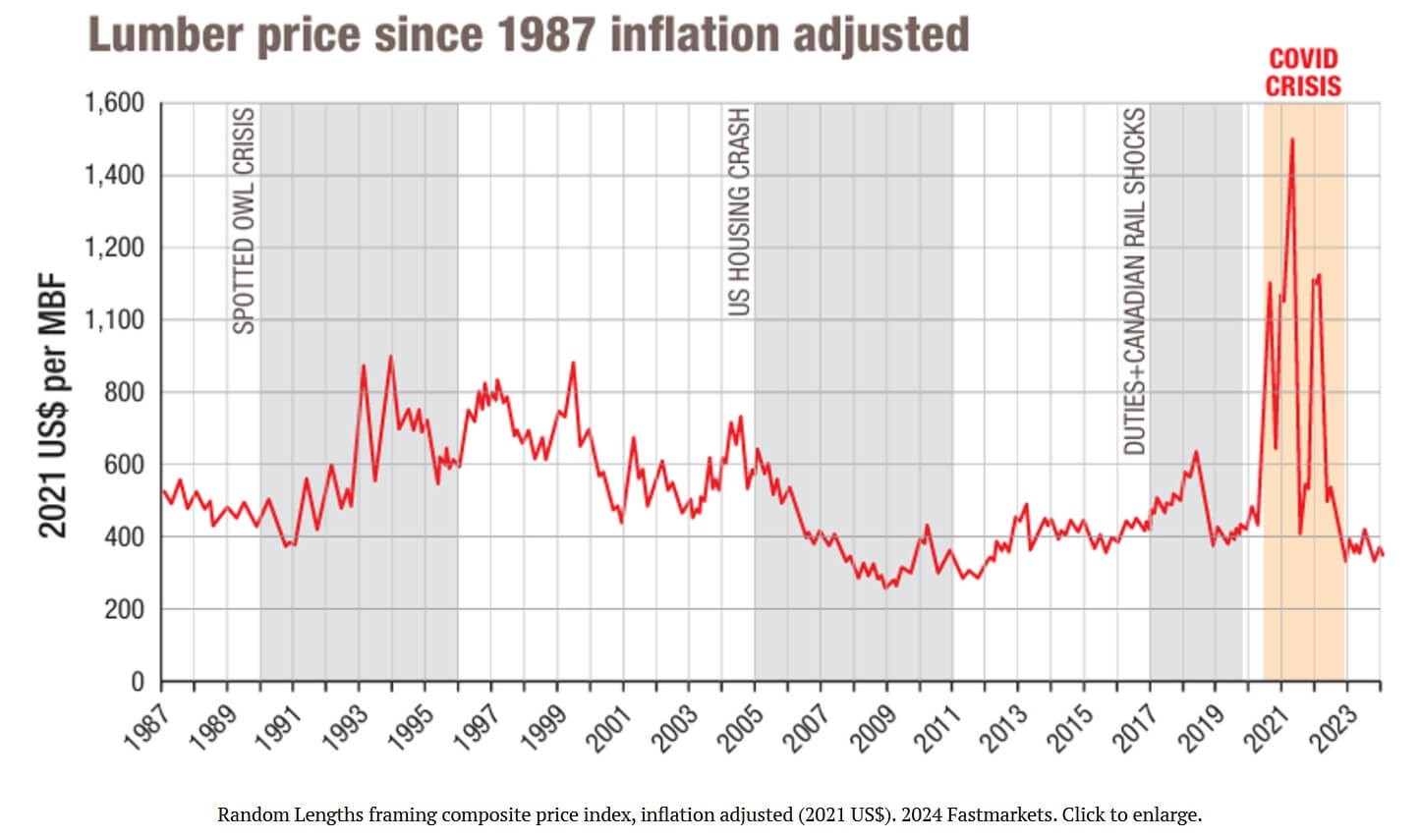
Howard O’Neal traded lumber for 20 years at Do it Best, where he was divisional manager for the lumber division. He’s now director of forest products for Fort Wayne, Ind.-based Continental Supply. He told HBSDealer with the exception of the Covid years, the year 2025 was historically challenging from a trader’s perspective.
The mills and futures markets were nervous about big tariffs, so they raised their prices on anticipated costs, as opposed to what was actually happening, O’Neal said. At times, dealers faced intense price vulnerability as swings of, say, 20 percent were here one week, gone the next.
“It was very difficult to navigate,” he said “especially if you were a business that absolutely needed the product,” when it was priced arbitrarily high.
At LBM Advantage, Johnson said the first half of 2025 was particular treacherous to navigate. “It was all about uncertainty because we didn’t know from tweet to tweet what the tariff was going to be and on what products.”
In the second half of the year, the challenge shifted to managing for mill curtailments and closures, as the after effects of the tariffs and duties took hold across Canadian suppliers.
According to Sherwood Lumber’s Little, this year is looking better, from a lumber trader’s perspective, despite concerns over war, energy prices and immigration issues.
Have a big impact on the price of lumber. Historically, 20 percent to 30 percent of the delivered price of lumber is actually freight, Little said. And the immigration crackdown has led to a decline in drivers for flatbed trucking.
“If we did not have this war right now, the marketplace overall would be pleasantly surprising,” he said in an early April interview. January and February “stunk,” he said, but March improved dramatically.
“And I am optimistic for this year still,” he added.
On what makes a good trader:
Johnson: “We’re in a commodity market where you have to be fast, you have to be nimble, you have to be paying attention. You have to be up on the market, and it changes by the minute. And like the weatherman, we have to have an opinion and be willing to share it.”
Ford: “People like to do business with people they trust. Establishing a rapport and connection and a relationship drives everything. That’s the starting point. Then, you have to have the expertise, the technical knowledge of the markets.“
O’Neal: “A good lumber trader has an understanding of the lumber account that he’s dealing with. With all the volatility, that buyer is looking for somebody he can trust. And once you establish that relationship, the next point is to deliver on it.”
On international trade:
Little: As duties and tariffs have impacted Canadian suppliers, (see sidebar) the U.S. saw a 20 percent decline of Canadian shipments to the U.S. in 2025. And that figure declined in the first quarter of 2026, said Little. Meanwhile the situation north of the border may have produced a new market south of the border. “One area that I think probably was the biggest winner in regard to forest products is Brazil,” he said.
Ford: The on-again off-again nature of tariffs required constant vigilance and communication with buyers. “The anti-dumping and countervailing duty rates will be readjusted again at the end of the summer. And those by all indications should be coming down.” As for the tariffs, “I don’t know that we’ve got a whole lot of insight into changes to tariffs.”
On the emergence of digital pricing services to replace the status quo of manual surveys:
Little: “While we are in a relationship business, I think there are going to be ways to automate processes that will allow us to be more productive.”
O’Neal: “The theory behind pricing automation all makes sense. Maybe at some point it will happen, but this industry is so entrenched in that personal relationship it just hasn’t been able to take hold.”
Johnson: “We all want the correct market information, and want it to be as close to the source, meaning the mills, as possible. At the end of the day, if the mills continue to use the legacy company, it’s going to be hard for the rest of the industry to make a change.”