
More Skilled Construction Workers Are The Key To Solving America’s Housing Crisis
Originally Published by: The Federalist — December 4, 2025
SBCA appreciates your input; please email us if you have any comments or corrections to this article.
America is grappling with a housing affordability crisis. While many on the left advocate for increased government involvement, such as rent control and subsidies, Ed Brady, the CEO of the Home Builders Institute (HBI), believes there’s a more effective solution: addressing the critical shortage of skilled workers in construction.
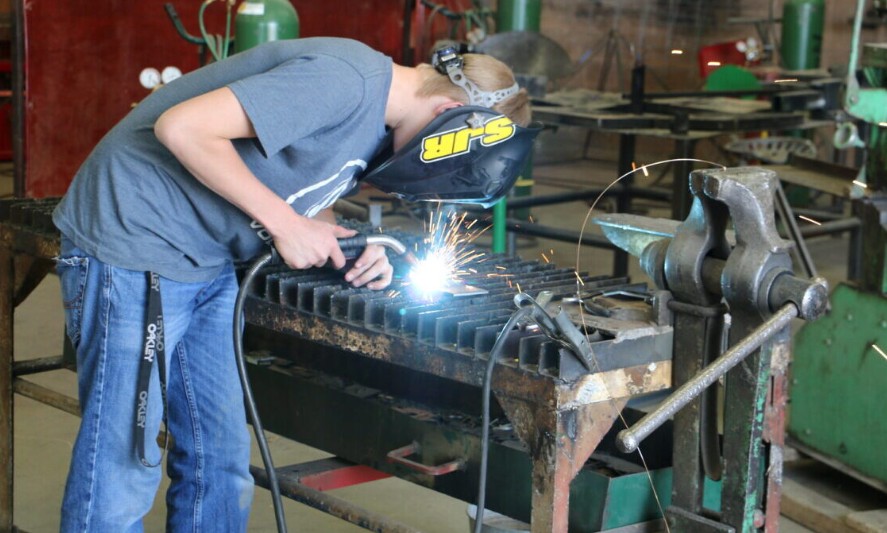
The escalating median age of first-time home buyers — rising from 31 in 2014 to a projected 40 in 2025 — serves as a powerful indicator of the housing crisis, primarily stemming from a lack of housing supply. McKinsey reports that “the housing shortage nearly doubled between 2012 and 2023, climbing to 8.2 million units,” with projections indicating it could reach 9.6 million units by 2035. Homebuilders struggle to meet demand due to a lack of qualified workers.
Brady emphasizes the urgent challenges facing the home building industry, notably an aging workforce, with the median age of construction workers at 42. Recruiting younger, skilled workers is becoming increasingly difficult, especially in essential trades such as electrical, framing, plumbing, and HVAC. This labor shortage has driven builders to raise wages significantly to entice a dwindling pool of talent, which inevitably extends construction timelines. Consequently, higher labor and carrying costs associated with these delays are pushing housing prices upward.
A recent HBI study reveals that the skilled labor shortage in the home building sector costs the economy $10.8 billion each year, including $2.7 billion from longer construction times and $8.1 billion from lost construction opportunities, equivalent to 19,000 homes. Brady highlights three factors driving this crisis: misconceptions about the industry’s physical demands, the elimination of high school shop classes, and the belief that a college degree is the only route to success. This mindset has pushed high school graduates away from vital skilled trades, leaving the industry at risk.
Misconceptions about Job Requirements
Brady believes many young people, especially young women, are deterred from careers in home construction due to misconceptions about the industry. Many still view it as physically demanding and male-dominated. However, critical roles such as electricians, plumbers, and carpenters are less physically intensive than commonly thought, and modern tools have become user-friendly.
Moreover, success in skilled trades goes beyond physical strength. For example, proficiency in carpentry requires a strong grasp of math and problem-solving skills. Brady points out that learning about skilled trades is akin to studying science, technology, engineering, and math (STEM) in school, but with the added benefit of hands-on experiences guided by industry professionals.
Shop Classes Close
Brady highlights that high schools once offered invaluable “shop classes,” where students learned practical skills including car repair and carpentry. These programs often guided some young individuals toward considering trades as viable and fulfilling career paths. Unfortunately, from the 1990s to the 2010s, increasing government’s involvement in education — emphasizing standardized testing and prioritizing “coding skills” — led to the near elimination of shop classes from America’s high schools. Consequently, many graduates left school unaware of the potential in trades.
A CNBC report reveals a staggering contrast: “Only 114,000 Americans in their 20s completed vocational programs during the first 10 months of last year, compared to 1.24 million who graduated from four-year colleges and 405,000 who received advanced degrees.” This misguided belief that a college degree is the only ticket to professional and financial success has left countless graduates either unemployed or underemployed, grappling with burdensome student loan debt. No wonder a new poll finds two-thirds of registered voters don’t think a four-year college degree is worth the cost.
Job Openings
Meanwhile, the home construction industry is grappling with a significant shortfall of more than 300,000 skilled trade job openings. Several organizations are at the forefront of tackling this urgent skilled labor shortage. The College of St. Joseph the Worker in Ohio integrates Catholic teaching with vocational training in trades like carpentry and plumbing, allowing graduates to earn a bachelor’s degree in Catholic studies while also mastering a skilled trade.
For individuals who opt not to pursue a traditional four-year college degree, HBI offers a variety of pre-apprenticeship training and certification programs at no cost to students. Upon completing their training, students will be connected with job opportunities in the construction industry. A high school graduate who has earned a pre-apprenticeship certification from HBI can secure a skilled trade job with an annual salary of $60,000, paving the way for a rewarding and stable career.
While organizations like HBI and the College of St. Joseph the Worker are doing great work, they alone cannot bridge the skilled worker gap in home construction. More high schools need to reintroduce “shop class,” and state and federal governments should increase funding for trade schools. Furthermore, America needs a cultural shift to recognize skilled trades as valuable career paths for young people, especially given how the rapid advancement in artificial intelligence (AI) is reshaping the workforce.
A new study from the Massachusetts Institute of Technology estimates that AI could replace up to 12 percent of the U.S. labor force, particularly impacting college-educated workers in entry-level finance, healthcare, and professional services. However, Brady believes skilled trades, especially in construction, are largely safe from this disruption. He emphasizes that “AI won’t fix your plumbing at 2 a.m.” and that the hands-on expertise of tradespeople is crucial in real-world situations.
Additionally, the burgeoning AI industry will create a heightened demand for skilled labor, as it generates the need for data centers and energy infrastructure — tasks that only skilled tradespeople are equipped to handle. As Brady aptly puts it, “A shovel-ready project cannot move forward without somebody moving the shovel.”
By providing targeted encouragement and education, America can motivate a new generation to pursue fulfilling careers in skilled trades related to home construction. This initiative is crucial not only for enhancing housing affordability but also for ensuring our nation’s continued leadership in AI innovation. It is long overdue that America invests in our future and empowers a workforce that will drive both economic growth and technological advancement.
Helen Raleigh, CFA, is an American entrepreneur, writer, and speaker. She's a senior contributor at The Federalist. Her writings appear in other national media, including The Wall Street Journal and Fox News. Helen is the author of several books, including "Confucius Never Said" and “Backlash: How Communist China's Aggression Has Backfired." Her latest book is "Not Outsiders: Asian Americans’ political activism from the 19th century to today.” Follow her on Twitter: @HRaleighspeaks.