
Hi-Vis Apparel Standard Gets Revised
Originally Published by: Safety & Health — November 9, 2026
SBCA appreciates your input; please email us if you have any comments or corrections to this article.
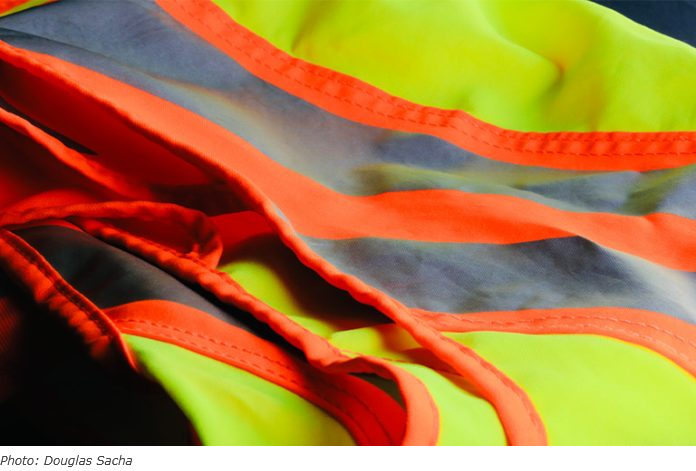 Arlington, VA — Changes intended to improve fit for smaller workers and modernized testing methods are among recent updates to a consensus standard on high-visibility safety apparel.
ANSI/ISEA 107-2026 covers an estimated 45 million workers, including those in construction, utilities and roadway work, along with first responders.
“Poorly fitting PPE can create problems of its own,” the International Safety Equipment Association says in an Oct. 26 press release. “Oversized high-visibility garments can snag on equipment, interfere with movement or cause reflective materials to sit differently on the body than intended. The revised provisions give manufacturers greater flexibility to develop garments that fit smaller workers while continuing to meet the standard’s visibility requirements.”
The revised testing methods include those for colorfastness, laundering, tear resistance, dimensional change and retroreflective performance. Also outlined in the revised standard is a new, optional test for nighttime visibility.
Additionally, the revision updates testing and design guidance for split-trim, segmented, noncontinuous and heat-applied retroreflective materials. Another change is for a Declaration of Conformity on each manufacturer’s style or model of high-visibility garments, which should be available on request.
“Standards have to evolve as we learn more about how PPE performs and how people actually use it,” ISEA President and CEO Cam Mackey said in the release. “The goal isn’t change for the sake of change. It’s making sure the standard continues to incorporate current science, current testing practices and the needs of the workers it is designed to protect.”
High-visibility performance classes 1, 2, 3 and E remain the same, as do Type O, Type R and Type P systems.
“The three approved fluorescent background colors – fluorescent yellow-green, fluorescent orange-red and fluorescent red – also remain unchanged, along with core requirements governing reflective performance and garment design,” the release states.
“The update also does not mean high-visibility garments compliant with the previous edition suddenly become obsolete. Following publication, products tested and labeled to both editions are expected to coexist during a transition period.”