
Myths and Misconceptions About Proper PPE Use
Originally Published by: Safety + Health Magazine — September 28, 2026
SBCA appreciates your input; please email us if you have any comments or corrections to this article.
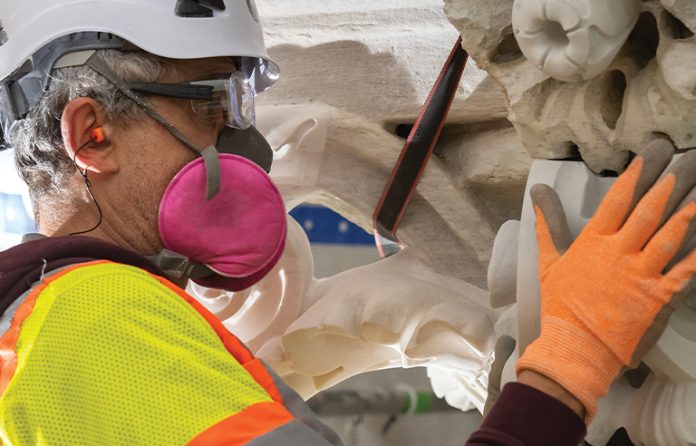
Makers of personal protective equipment are more than manufacturers – they’re educators. The companies that lead the way on quality and innovation truly care about their products’ end users. They want their customers to purchase the right PPE and ensure it’s used the right way.
Yet, among both people responsible for buying PPE and workers who are required to wear it, misconceptions still exist. That’s why we reached out to multiple manufacturers – and the trade association that represents them – and asked them to share some of the myths (and truths) about proper PPE use. Here’s what they said.

One of the most common misconceptions in hand protection is the belief that cut-resistant gloves are cut proof. While the terms are often used interchangeably, they have very different meanings. Understanding this distinction is critical for making informed safety decisions and ensuring proper workplace protection. Cut-resistant gloves are engineered to reduce the risk of cuts and lacerations by using specialized materials and construction techniques.
However, no glove can guarantee complete protection against every sharp edge, blade or cutting hazard. The level of protection a glove provides depends on factors such as the force applied, the sharpness of the object, the angle of contact and the overall work environment. Selecting the right glove requires evaluating the specific application, identifying workplace hazards and understanding the level of risk involved. A glove that performs well in one environment may not provide adequate protection in another.
Educating customers about the difference between cut resistance and cut proof protection helps set realistic expectations and encourages safer glove selection practices. By choosing gloves based on the actual hazards present, workers can better protect themselves while maintaining comfort, dexterity and productivity on the job.
— Casey Barriball, product developer, Magid Glove and Safety

When facilities evaluate supplied-air respirator programs, the focus is typically on respirator design, comfort and operator feedback. But the variable that determines whether the respirator is doing its job – the pounds-per-square-inch pressure setting at the regulator – often gets treated as a background detail.
A supplied-air respirator system is a positive-pressure system that works by maintaining a flow of breathable air at a pressure sufficient to help keep contaminated ambient air from migrating into the breathing zone. Key elements such as airline length, industrial fitting type, flow control and the specific respirator head top can have significant implications for the required pressure setting. If airline length changes but the PSI setting is not updated, the SAR system may not work as intended. A supplied-air system operating below its intended pressure can be an invisible danger and may not announce itself through obvious signs like a torn glove or leaking airline.
Pressure verification is the responsibility of the employer and end user. Programs that build periodic pressure checks into respiratory protection procedures and training can close a critical gap that is easy to overlook.
— Patrick Bello, global product portfolio manager, respiratory, Bullard

If a glove has a higher cut or impact rating, it must provide better protection for every application.” The reality is that there’s no one glove that’s best for every job. A higher cut or impact rating can mean more protection from a specific hazard, but it can also come with trade-offs in dexterity, comfort, breathability or overall performance. For example, an A6 Impact Level 2 glove offers a high level of protection, but that doesn’t necessarily make it the best choice for every task.
— Jonathen Hale, products specialist, Delta Plus USA

The biggest myth in PPE is that owning it means you’re protected. Gear gets issued, the box gets checked and everyone assumes the job is done. But PPE isn’t a purchase – it’s a practice. Has it actually been maintained? Fitted to the person wearing it? Configured or calibrated for the specific hazard on that job that day? A respirator that doesn’t seal, a harness that’s the wrong size, a gas monitor that hasn’t been bump tested – none of that is protection. It’s the appearance of protection. That gap is arguably more dangerous than having no PPE at all because it changes behavior. People take more risks when they believe they’re covered. Real protection is a system, not an item: the right equipment properly maintained, properly fitted and actually used correctly – not just present. If a safety program treats PPE as a line item on a purchase order instead of an ongoing discipline, it isn’t really a safety program. It’s inventory.
— Casey Lewis, national sales manager, Gas Clip Technologies

Myth: All helmets prevent concussions.
Truth: Many don’t.
Skull protection and brain protection have little to do with each other. That’s why most helmets do a fine job keeping our skulls intact in a major incident, but they do little to prevent concussions and other significant brain injuries. While most helmets are designed and tested to protect against direct impacts, studies prove that most brain injuries are actually caused by brain torque – when the head rotates and, in turn, twists the brain inside.
This is also why you don’t need a catastrophic incident to have a catastrophic injury. On construction sites, it’s rarely falling objects that cause brain injury. A majority of brain injuries actually happen from simple slips, trips and falls.
So, why aren’t more helmets designed to protect against brain torque? Because our standards don’t require them to. Despite having the data for decades, ANSI standards still only measure direct, blunt impacts. There is no standardized test for brain torque. Our team designed our own.
When choosing a helmet, ask the question: Is your helmet made to protect the brain or just the skull?
— David Visnack, CEO, Hardknock and Nuro

Are all palm coatings the same?
Not when it comes to how they perform. The coating can affect how well a glove grips, how easily the hand moves and how much the worker can feel through it.
Coatings are designed to support different types of performance. For example, foam and micropore nitrile can help maintain grip around liquids. Polyurethane has a thinner profile that supports better touch sensitivity. Latex can provide strong dry grip and durability, while silicone can add heat resistance where higher temperatures are a factor.
The coating’s thickness and flexibility also influence tactility and dexterity. These factors matter when workers are handling small components; gripping and releasing materials repeatedly; or working in dry, wet or oily conditions.
The right coating should suit both the application and the glove’s performance needs. When it supports the task, it can improve comfort and control, encourage consistent glove use, and help workers receive the protection the glove is designed to provide.
— Superior Glove, hand protection manufacturer

Think about the people you see on every jobsite. The different heights and body types. Differences between genders. Traditional hairstyles and head coverings. The sheer diversity of the human form poses an obvious problem for PPE claiming to be “one size fits all.” Fit can also change throughout the day. The gear that felt right at 6 a.m. may be slipping, sagging or snagging by quitting time due to hours of continuous movement, sweat and wear.
Why does the one-size myth persist?
Convenience. One size is easier to manufacture and simplifies inventory control for safety managers who need to keep PPE on hand for rotating crews. But convenience comes at a cost.
Poorly fitting PPE isn’t just less effective. It can create hazards of its own, like trips, falls, snags and gaps. Uncomfortable PPE is also more likely to be removed by the worker, which defeats the purpose entirely.
The solution here is simple: If it fits well and feels good, it stays on all day long. Plus, the Department of Labor and OSHA issued updated PPE rules for the construction industry in 2024 requiring properly fitting PPE for all workers regardless of gender or body type.
So, when it comes to PPE and worker safety, the right fit is no longer just the right thing to do. It’s the law.
— Kris Wolle-Wayne, associate product manager, Ergodyne

A big, persistent misconception about PPE is that if it checks the OSHA box, workers are fully protected. Meeting OSHA requirements matters. It’s the law, and those rules set an important baseline. But compliance should be viewed as the floor – not the ceiling – when it comes to protecting workers.
PPE keeps getting better. New materials, smarter designs and improved testing lead to gear that protects better, fits better and is more comfortable to wear throughout a long shift. That’s why employers should look for PPE that conforms to the latest applicable industry consensus standards. Those standards are regularly updated to keep pace with new hazards, technology and lessons learned on the job.
But it’s not enough to simply see a standards mark on the package. Safety professionals need to understand what the standards cover, how products are tested and which performance levels match the hazards their workers face. The more informed the person choosing the PPE is, the better that choice will be.
Going beyond compliance doesn’t mean buying the most expensive gear. It means choosing proven protection that fits the worker, works for the job, and can be worn correctly and comfortably all day – helping everyone get home safe after every shift.
— Cam Mackey, president and CEO, International Safety Equipment Association