
Work That Teaches, Skills That Stay
How Programs Like Big Heroes, Tiny Homes Are Shaping the Next Generation of the Construction Workforce
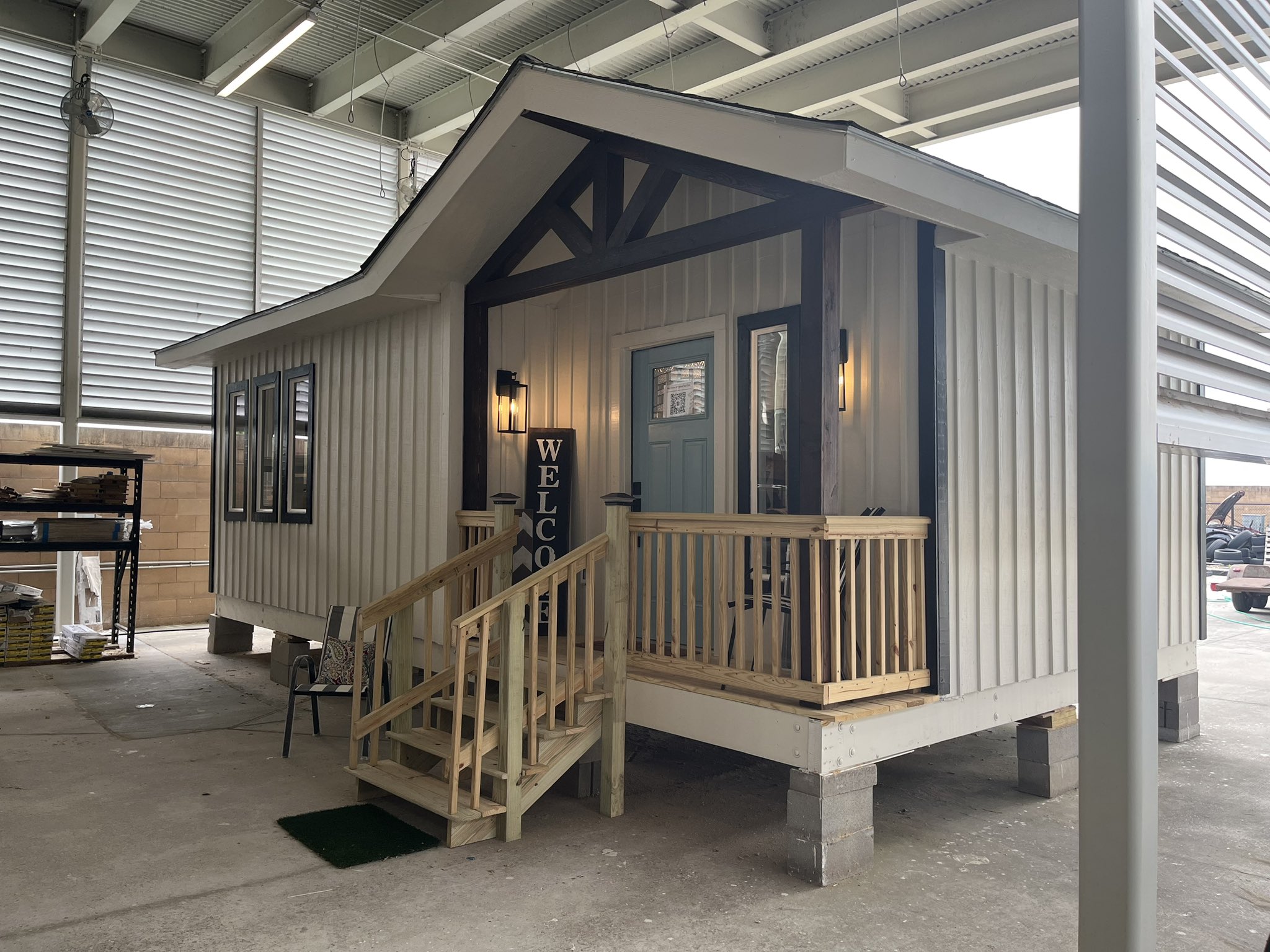
FOR MANY PEOPLE, CONSTRUCTION LOOKS LIKE crews on a jobsite wearing hard hats and safety vests, and nailing studs together. Framing goes up, crews work together, and a structure slowly takes shape. What isn’t seen are the decisions behind the walls, the coordination among trades, and the people making all of it possible.
For the students involved in the Students Helping Veterans: Big Heroes, Tiny Homes program, that view of construction does not last long.
Big Heroes, Tiny Homes is a student-led initiative within the Texas Humble Independent School District (Humble ISD) that gives high school students the opportunity to design, plan, and construct tiny homes that serve as transitional housing for homeless veterans. The program operates in partnership with Operation Finally Home, an organization dedicated to providing mortgage-free homes, modifications, and transitional housing to support veterans, first responders, and their families. Together, students ensure that what is built on school campuses becomes something permanent and meaningful beyond them.
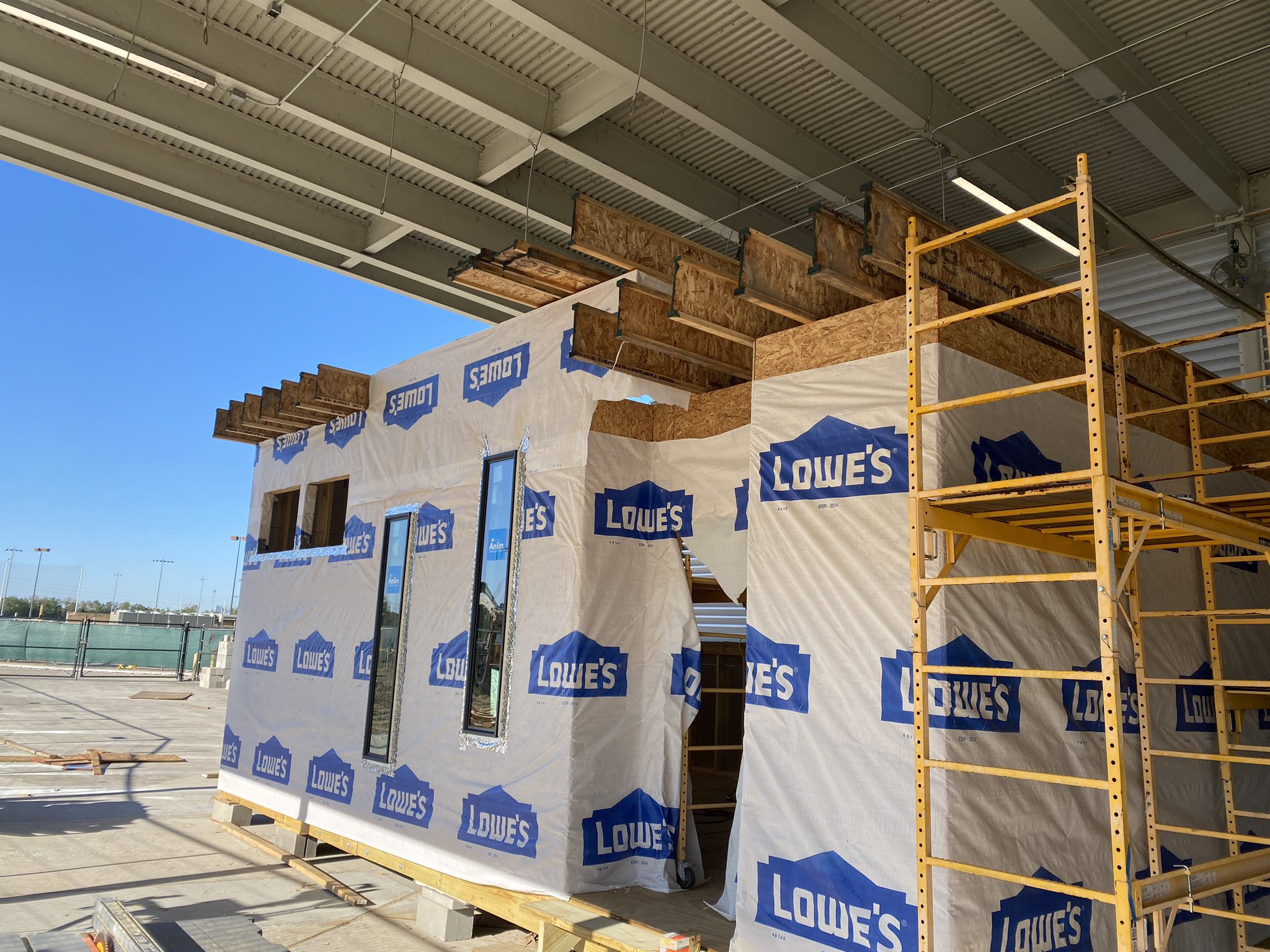
Each school day, for two class periods, students learn on the build site and in the design classroom, not as observers, but as participants. Some learn how to read a tape measure or square a wall for the first time. Others coordinate schedules, organize materials, refine designs, or step in to help a teammate who needs a second set of hands.
Once completed, these homes are placed at Langetree Retreat & Eco Center in Liberty, Texas, a growing community designed to support veterans as they transition out of homelessness. At Langetree, the tiny homes form neighborhoods rather than isolated units. Shared outdoor spaces encourage connection. A community center, supported in part by the SBCA Foundation, provides a place for gathering, services, and stability during this transitionary period (learn more in the 2025 November/December issue of SBCA Magazine).
Since its start in 2018, Big Heroes, Tiny Homes has delivered 17 homes, with four more currently under construction. By summer 2027, Langetree will host 25 student-built tiny homes.
At Humble ISD, the distance between framing a wall and seeing that wall become part of someone’s future is short. And it is in that space, between campus and community, that students begin to see construction differently.

Learning From the Inside
There are many ways students find their way into the program. Some start by volunteering after school. Others join the Architecture Committee, helping with event planning, fundraising, and logistics. Some enroll in the Principles of Architecture class, while others work toward earning a spot on the Build Team through a competitive tryout process.
Samantha Rogers, a senior at Summer Creek High School, currently serves as the Project Manager for the Build Team. She began volunteering as a freshman, earned a Build Team position as a sophomore, and stepped into the project manager role as a junior, which she continues to hold as a senior. On the build site, Samantha keeps the team organized, focused, and safe, while coordinating daily tasks and helping the group work as a unit.
“My role is to lead the Build Team members in the construction of the home,” says Samantha. “Our goal is to be more efficient, safer, and to build a better home each year. We’re always learning how to do things better and more efficiently.”
Angelina Casanova, a 2023 graduate of Summer Creek High School, represents the design side of the program. As a student of the Principles of Architecture class, she submitted a design that was ultimately selected, built, and delivered the year after her graduation. Seeing her design move from drawings to a finished structure reshaped how she understood responsibility and collaboration, and gave her rare early experience designing a space that someone else would live in.
Angelina Cherian, a senior at Summer Creek High School and current Architecture Committee Vice President, helps guide the logistical side of the program. Her committee organizes events like the open house, Notes of Love, and the design selection ceremony, while also coordinating supplies and supporting the build process behind the scenes.
“Before joining Big Heroes, Tiny Homes, I knew I wanted to pursue architecture, so I thought I should explore this class to see if I really wanted to do it,” says Angelina Cherian. “After becoming so involved with the Tiny House program, I know it’s something I want to go into, and the skills I’ve learned have helped that.”
Together, these experiences show that Big Heroes, Tiny Homes is not defined by a single pathway. It mirrors the construction industry itself, with roles in design, planning, coordination, and execution, all working together toward a shared outcome.
Shifting the Perspective
Many people start with a narrow understanding of construction. Some see it as physical labor alone. Others see a single trade, or a career they never pictured themselves in. For many, construction feels intimidating.
That understanding begins to change once they are inside the work.
On the build site, students quickly see how many paths intersect to create a finished home. Framing is one part of the process. Electrical, plumbing, design, project management, and finishing also all play critical roles. To deepen that understanding, professionals from different trades visit the school’s build site to demonstrate techniques and explain how their work fits into the larger system.
That access matters. It demystifies the trades and shows students what expertise looks like in practice.
“It’s changed how I understand the trades,” says Samantha. “Being part of the build showed me how much detail and coordination goes into everything. There’s so much happening behind the scenes to make one cohesive, functioning home.”
For students involved on the design side, the proximity to the build site changes everything. Design stops being theoretical. Seeing the homes being built and delivered to Langetree, and meeting the veterans who will live there, reframes how students think about accessibility, comfort, and daily use.
“In college, it’s very theoretical,” says Angelina Casanova. “Actually being able to design a house and have someone live in it changes your perspective as an architect. You start to understand how you influence the built environment.”

All three students describe a shift in how they view construction and the related trades. What once felt intimidating or distant becomes understandable, approachable, and full of options.
“Being able to participate in this program as a high schooler makes it less intimidating,” explains Angelina. “It shows you can do it, and it shows you opportunities through it.”
Watching the Change
James Gaylord, Operations Manager at Operation Finally Home, has watched this transformation unfold since the program’s inception. Having worked closely with students, educators, and industry partners, he sees the homes as important, but secondary.
He has witnessed students enter the program with uncertainty and leave it feeling steadier, more capable, and more confident. “They went in not knowing what they needed to know,” he says. “They learned what they needed to know and gained the confidence that there’s nothing they can’t do.”

Big Heroes, Tiny Homes is a wonderful program that teaches students about hard work, giving back, and making a difference. “But the houses are just one of the byproducts,” James says. “The real product is these young ladies and men; they are what will make a big difference in our world and future workforce.”
Not only is this program providing housing for homeless veterans, a very meaningful and important initiative, but it is teaching students skills beyond the classroom and helping to build the future generations of decision-makers.
From the Classroom to Career
What’s next?
Students enter the program for different reasons, but along the way, many begin to see construction and the trades as something more than a class they once took. It becomes a viable path forward, another option for the future.
After talking with the three Summer Creek students and James, it is clear that options are growing. There are many students that are going into architecture, electrical work, engineering, plumbing, and construction because they have been given the chance to see those career paths as options through Big Heroes, Tiny Homes. They respect the work. They know what quality construction looks like because they have done it themselves, and have learned from professional tradespeople.
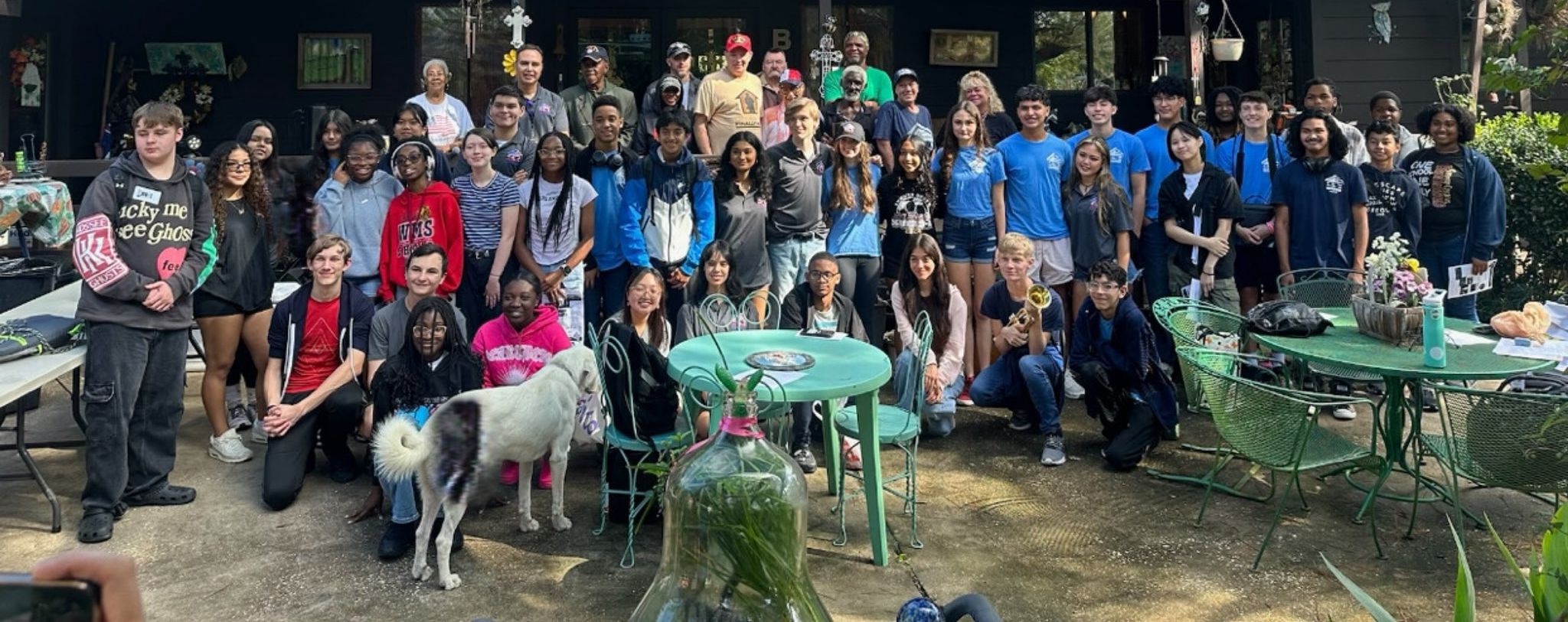
James sees that as one of the program’s strengths. The goal, he explains, is not to funnel every student into the same outcome, but to create informed entry points into society. Some students move straight into the trades, while others move into adjacent roles. Some go to college in various fields, and some carry that new knowledge and understanding with them as future homeowners, managers, and advocates in whatever they do.
Regardless of whether they go into the trades or not, providing opportunities for students and young people gives them the chance to explore all their options. It builds a future homeowner who values craftsmanship. It builds a future community member who understands the importance of the trades.
What makes the program effective as a workforce pipeline is not just skill development, but exposure. James shares a story of one of his previous students, Madisyn, capturing how that exposure can change one’s direction entirely. Madisyn, a graduate of Summer Creek and now college student, entered the program planning to pursue architecture. She spent time in the design classroom, learning how buildings take shape on paper and screen. But during her senior year, she decided to join the Big Heroes, Tiny Homes Build Team.
It was there, working through real construction challenges, that something clicked.
During the build, the team encountered a design element that required a custom truss. Madisyn was asked to help figure it out with the team. Watching her navigate that process, James saw a shift. “She was the leader,” recalls James.
What began as a design exercise became a moment of clarity. Madisyn realized she did not just enjoy imagining how a structure should work. She loved being part of making it happen. By the time she graduated, her plans had changed. Instead of pursuing architecture, she chose to pursue construction management.
For James, Madisyn’s story illustrates what the pipeline looks like in practice. It is not a straight line. It is a series of moments where students discover what kind of work resonates with them because they have been able to try it.
In that sense, the pipeline does not begin at graduation. It happens in the experiences before that. At Humble ISD, it begins the first time a student steps onto the build site and realizes that this world, this industry, is larger, more complex, and more welcoming than they once assumed. And that it is a possibility that can be pursued.
Why This Matters
For the structural building components and the broader construction industries, workforce challenges are immediate and real. Retirements continue. Demand remains high. Too few young people are entering the field.
Construction still carries a lot of assumptions. For someone who has never been on a jobsite, held a tool, or heard a tradesperson explain what they do and why it matters, the whole industry can feel like something distant.
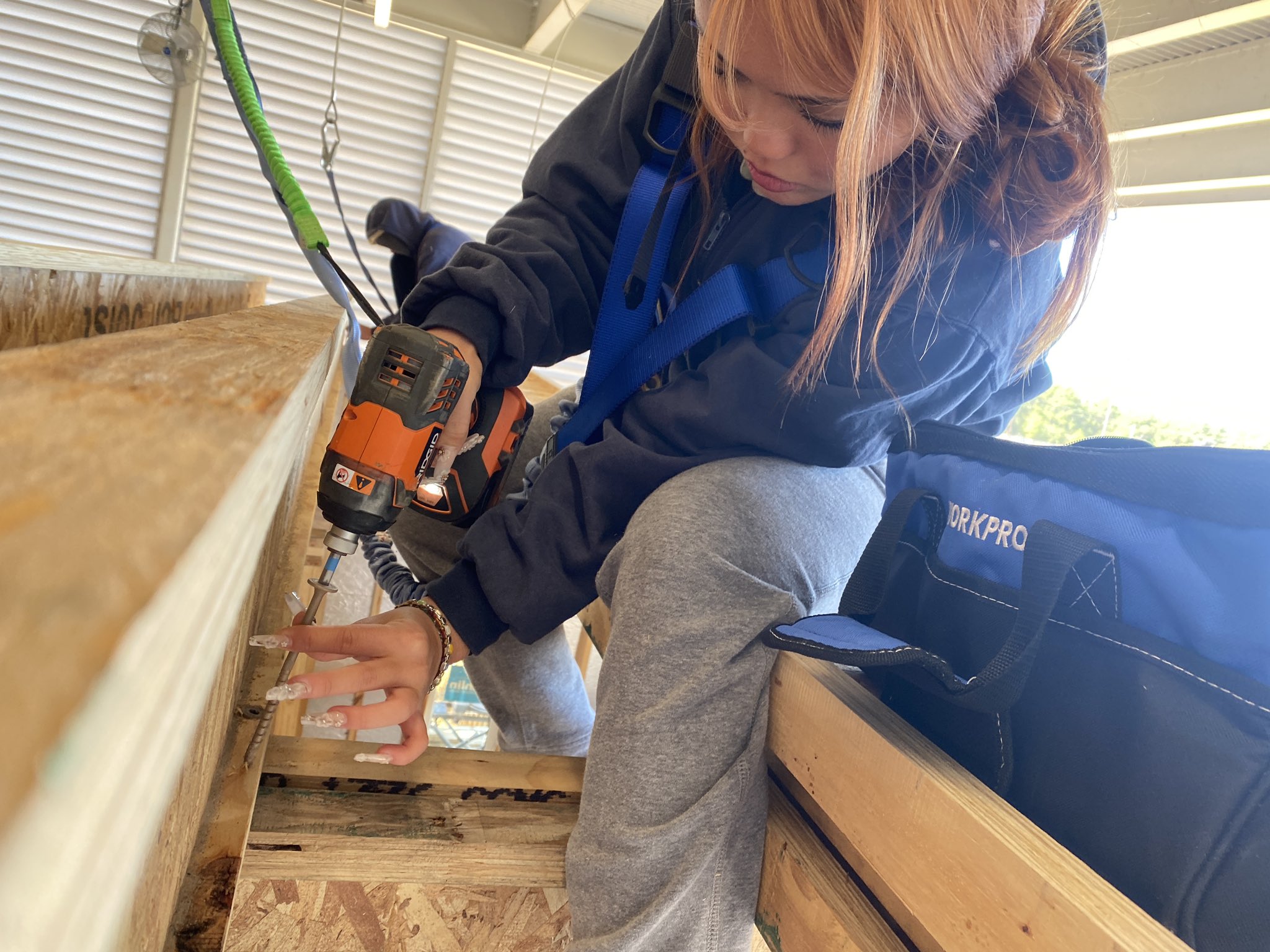
Programs like Big Heroes, Tiny Homes interrupt that early on. It is programs like these that make a difference not only in the lives of others such as veterans, but also in the lives and futures of the students themselves. They show that construction is not just physical labor, but problem solving, coordination, design, and leadership. They allow students to discover aptitude and interest through experience rather than assumption. They open the door to something more. And it is not just that students learn how to build. They learn what building really is.
They learn that it is a full systems approach with framing, electrical, plumbing, HVAC, design, scheduling, safety, and logistics. It is a coordinated effort of skilled people doing skilled work, and they learn to see the professionalism in that. They learn that tradespeople are not “just workers.” They are experts.
That shift is hard to replicate through lectures or career fairs alone. It is even more difficult when the industry is not represented and not making these connections.
Big Heroes, Tiny Homes does something the construction industry needs badly right now: it creates familiarity, builds confidence, makes the world feel possible, and makes the industry feel reachable.
And that matters even for the students who do not end up in construction.
A student who leaves this program to pursue nursing, business, or education still walks away with trade literacy. They have a better understanding of how homes work. They respect craftsmanship. They know what quality looks like because they have been part of producing it. They become better homeowners, better project owners, better advocates for the work. They become adults who do not dismiss the trades because they have seen the intelligence, discipline, and coordination it takes to build something that lasts.
For the students who do choose construction as their path, the effect is even more direct. They graduate with baseline understanding, a working knowledge of jobsite expectations, and exposure to multiple career lanes inside the industry.
A house can be framed in a day. Confidence takes longer. Careers take longer still. That is exactly why programs like this should matter to SBCA members, component manufacturers, framers, and everyone connected to the residential construction pipeline. If we want a stronger workforce five, ten, fifteen years from now, we do not get there by waiting for people to apply. We get there by showing up earlier, getting involved at the local school level, and bringing awareness to the fantastic opportunities we all know this industry offers.
The only way to build the future workforce is to start at the foundation, and that foundation is students and young people. It shows them the options they have in the world and for their future. It gives them access, exposure, and real experiences that help them see construction in a new light.
Not everyone needs to, can, or wants to go to college. Not everyone knows what they want to do at the age of 17. But every student deserves to understand the full menu of opportunities, including the trades and the career pathways that can take a person from the shop to the top.
This is a model that does not ask the industry to do something complicated. It asks the industry to be present. To step in. To teach. To demonstrate. To mentor. To treat students like future professionals.
If we want the next generation to build with skill, lead with confidence, and stay in this industry long enough to carry it forward, then we have to show them it is worth belonging to.
And sometimes, that starts with something as simple as a school, an empty patch of parking lot space, a set of tools, and a group of students who are ready to prove they can do difficult things.
To learn more about Big Heroes, Tiny Homes; Operation Finally Home; Langetree Resort & Eco Center; or the SBCA Foundation, please visit the links below:
• https://www.humbleisd.net/page/students-helpingveterans
• https://www.operationfinallyhome.org/