
10 Key Takeaways from the Leaders of Nation’s Largest Builder
Originally Published by: Builder — May 8, 2026
SBCA appreciates your input; please email us if you have any comments or corrections to this article.
Home building's top leaders gathered in Southern California for three days of learning, debate, and networking at BUILDER's flagship event.
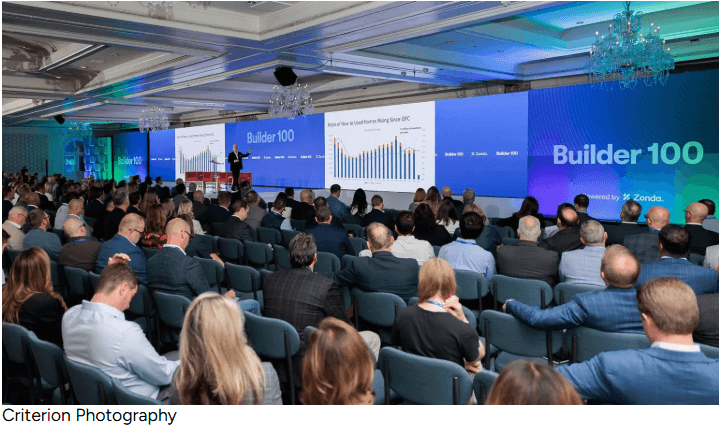
The Builder 100 event continues to serve as a pulse check on where the home building industry stands—and where it's headed next. This year's summit just concluded at The Ritz-Carlton Laguna Niguel in Dana Point, California, capping three days of insight, strategy, and connection among the industry's top builders.
For 2026, the conference brought together 550 industry leaders across 25 sessions featuring 47 speakers, from Zonda's top advisors to representation across the Builder 100 and Next 100 lists to industry partners and sponsors and more.
For those not able to attend in person, here are 10 key takeaways from the event:
- Economic headwinds: Starting out strong, Zonda and NewHomeSource chief economist Ali Wolf discussed the impact of geopolitical conflicts, stock market volatility, and oil price changes on consumer confidence and housing market trends. Although the headlines seem heavy today, one of her tips is to follow population patterns, demographics, affordability, and job growth. Understanding the nuances of population growth will help with identifying the markets most poised for success.
- Culture over strategy: The CEO panel, including Ken Balogh of Ashton Woods, Jay Brown of David Weekley, Allan Merrill of Beazer Homes, and Phillippe Lord of Meritage Homes, emphasized that company culture outweighs strategy and that investing in people is essential in the business amid AI disruption.
- Consumer confidence reshape: Merrill—the 2026 Hearthstone BUILDER Humanitarian Award recipient—also had another interesting point on the CEO panel. We often talk about consumer confidence in broad terms, but it needs to be unpacked. "Income confidence" is largely driven by macro factors like the economy and labor market, and is outside builders' control. On the other hand, "asset confidence" is something builders can influence by helping buyers better understand the long-term value of homeownership, especially new homes.
- Japanese investment: Japanese corporations continue to invest into the U.S. housing market, with overseas partners allowing local management autonomy and fostering successful collaboration. Involvement generally takes one of three forms: allowing companies to continue operating as they always have; pursuing vertical integration; or introducing entirely new construction and operating models based on approaches that have proven successful in Japan, the model of Sekisui House U.S., the 2026 Builder of the Year.
- Design as a key motivator: Mollie Carmichael, principal of master plan and product insights, moderated a panel on designing homes for a premium. A key takeaway from her panel was "staging literally expands the room in the buyer's mind." Wayfair representative Ali Richert shared the data on this and the role model staging plays, with potential buyers viewing staged rooms larger than empty ones.
- The role of women: Stressed in a few conversations throughout the conference, presenters said it is critical to understand the female consumer. In most households, she is the primary decision-maker, caregiver, and emotional center of the homebuying process. Dr. Joseph F. Coughlin from the MIT AgeLab, in particular, says "she has always been the chief consumer officer of the home and the chief care officer…If you understand this woman right here, you're influencing three generations of household buyers overall."
- Emotional connection: Dr. Coughlin also presented research on the psychology of the word home. Across age groups, consumers consistently describe "home" using the same five themes: family, safety, love, peace, and comfort. The opportunity for builders here is to bring these emotions to life through marketing, model home design, and customer experience.
- Land banking's rise: On the Land, Capital, and Control panel, industry leaders discussed the evolving landscape of land banking and its impact on the industry. Steve Benson, CEO of Essential Housing, states "land banking is now an asset class in real estate. It's not just an investment strategy. I think the cyclical nature was largely attributable to the fact that people were looking for the next good deal, but we're looking to be in the business for the long term on a sustainable basis."
- M&A activity: Chris Jasinski of JTW Advisors analyzed the evolution of the home builder M&A market. A key takeaway is the pool of buyers is expected to grow, with more foreign buyers entering the market. But for builders looking to sell, Brad Conlon with D.R. Horton emphasizes the importance of transparency and being mentally prepared for the sale, including the emotional aspect of letting go of a company.
- Marketing quality over quantity: The marketing panel discussed the evolving landscape of demand, emphasizing the need for data-driven, quality-focused strategies. Elicia Azali of Beazer Homes highlighted the importance of brand storytelling to attract customers. Linda Mamet of Tri Pointe Homes stressed the significance of understanding customer needs and lifestyle over quantity. Erin Willis of Sekisui House U.S. noted the distrust in the industry and the need to articulate authentic value.