
NLBMDA Appeals for Trade Stability
Originally Published by: HBS Dealer — September 14, 2026
SBCA appreciates your input; please email us if you have any comments or corrections to this article.
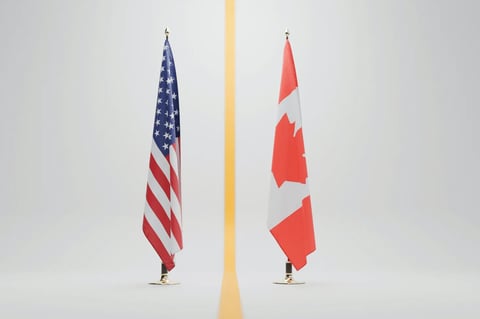
The NLBMDA sent the following message to its members regarding the impact of recently enacted tariffs on Canadian building materials.
As Congress returns to Washington today, the National Lumber and Building Material Dealers Association (NLBMDA) is urging congressional leaders and the Administration to address growing cost and supply pressures stemming from recently implemented Section 338 tariffs on Canadian building materials.
In a letter sent Monday to House Speaker Mike Johnson, House Minority Leader Hakeem Jeffries, Senate Majority Leader John Thune and Senate Minority Leader Chuck Schumer, NLBMDA urged Congress and the Administration to provide targeted relief for essential building materials where domestic production is insufficient to meet U.S. demand. NLBMDA also called for greater stability and predictability in the U.S.-Canada trade relationship, citing the highly integrated nature of the North American building materials supply chain.
NLBMDA’s outreach to Congress is informed by recent feedback from members on the effects of the new tariffs. In a recent member survey, 80 percent of respondents reported sourcing or availability impacts, while nearly 87 percent reported higher supplier prices. Dealers also cited reduced shipments from Canadian suppliers, longer lead times and difficulty identifying domestic alternatives that can readily meet demand.
“LBM dealers often rely on long-standing supplier relationships shaped by geography, product specifications, distribution networks and available capacity, while U.S. producers may not have sufficient capacity to absorb additional demand without delays or other disruptions,” NLBMDA wrote in its letter. “A sudden disruption therefore risks creating shortages rather than simply redirecting demand toward U.S. producers.”
The Administration’s action under Section 338 of the Tariff Act of 1930 imposes a 50 percent additional duty on a range of Canadian imports, including certain plywood and laminated wood products, medium-density fiberboard, particleboard, wood doors and other materials used throughout residential and commercial construction. The duties also apply to covered goods that would otherwise qualify for preferential treatment under the United States-Mexico-Canada Agreement.
NLBMDA’s letter also highlights the broader uncertainty created by sudden changes in tariff policy. Dealers, manufacturers and builders routinely make purchasing and pricing decisions months in advance, making abrupt shifts in tariff treatment particularly disruptive to inventory planning, supplier relationships and project estimates.
“As policymakers continue working to address housing affordability and expand housing supply, the cost and availability of the materials needed to build and renovate homes must be part of the conversation,” NLBMDA said. “Trade policy should provide businesses with greater certainty while avoiding unnecessary cost and supply pressures throughout the residential construction market.”
NLBMDA will continue urging Congress and the Administration to provide relief from Section 338 duties on building materials and pursue a durable U.S.-Canada trade framework that gives businesses the certainty and flexibility to source products from suppliers that best meet their needs. Trade policy should support a strong domestic manufacturing base while preserving the efficient, integrated supply chains that have long supported the U.S. construction market. At a time when policymakers are working to increase housing supply and improve affordability, federal trade policy should reinforce those goals, not raise the cost or reduce the availability of the materials needed to build and renovate homes.