
Ready Before the Crane
Tatge's Tips of the Trade
How Smart Planning Saves Time, Money, and Stress on the Jobsite
When I was 21 years old, I signed my first contract. I committed to framing 26 homes over the course of the following year. I knew how to mark layout, snap lines, etc. and I had most of it down except for building stairs. I figured I could struggle my way through that. In reality, I had no business signing that contract, but I would like to think that has changed over the years for a number of reasons.
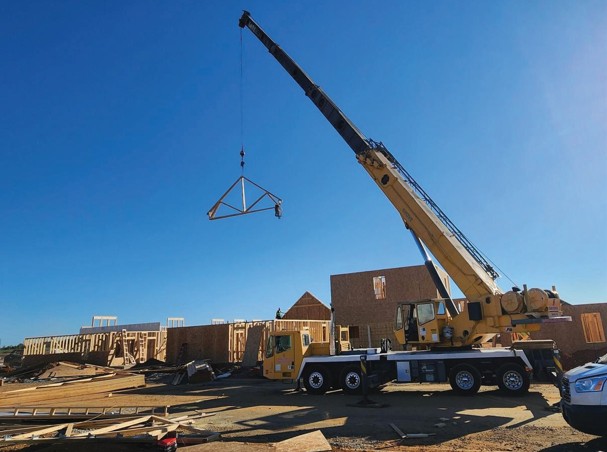
Crane lifts a bundle of trusses into position on a sunny day.
Like so many framers before me who went out on their own, I would look at a house print and do some back of the napkin math, asking myself how long will this take, how much will I have to pay the guys, how many boxes of nails do I need to buy, and most importantly how much will I have to spend on a crane rental to get the trusses on the roof?
Back then I didn’t understand cash flow. The money that was left over after framing a house went into my pocket. One of the best ways to increase that amount was saving crane time. Over the years, I learned the importance of being ready before the crane shows up. I learned that a little extra planning up front can save a lot of time and money once the crane shows up. Here are some of the key practices I still rely on today.
Communicate with Your Component Manufacturer.
Find out who’s building the trusses. Give them a call. A lot of component manufacturers (CMs) are eager to build relationships with framers. We are oftentimes the best referral they can get. Ask for girders and gables to be stacked on top. Sometimes they can’t accommodate you in the interest of safe loading, but most of them will try.
See if you can find out if they are coming out in any kind of sequence or batching. This will help you plan for crane placement and truss delivery.
A lot of component manufacturers (CMs) are eager to build relationships with framers. We are oftentimes the best referral they can get.
If you are used to getting your truss layouts in a jobsite package when the trusses arrive, ask for a digital copy. The extra information early on could come in handy.
Where Are You Going to Ask the CM to Drop the Trusses?
This can save or cost you a lot of time. Consider where you’re going to start setting trusses on the house. If you did not get the sequencing information from your component manufacturer ahead of time, then you’re going to have to look at the load and decide when they show up. Thinking ahead about crane placement is critical. Think mostly about the swing radius of the crane; you want it to be as short as possible. You also want to make sure you are not lifting over the top of the trusses you just set.
Good Truss Prep Planning.
Obviously, if you have the space, lay everything out so it is as accessible as possible. For tight areas, make sure you are prepping in the opposite sequence you are going to need the gables/girders in, so the first truss you need will be on top of the stack.
Pay special attention in the layouts to note any girders. Some girders must be set ahead of the normal sequence so later trusses can drop into hangers. Flag these early and prep your crew, so installation stays smooth without backtracking and losing valuable time.
You probably already know this but, if you’re setting a hip roof, get all of your jacks on the girders on the ground ahead of time because making sure those girders are not buried in the stack is a very big deal. I’ve been in situations where I couldn’t get to the girders ahead of time. That makes for a really long day when you’re trying to straighten out quick frames on top of an unstraightened girder after the crane is gone.
Prep Your Bracing and Have a Plan.
Marking out rat runs and layouts (lateral restraint for the engineers) ahead of time will save you precious minutes. Spread out the bracing and make sure you have extra. Open up your jobsite package and talk about your bracing plan with your crew.
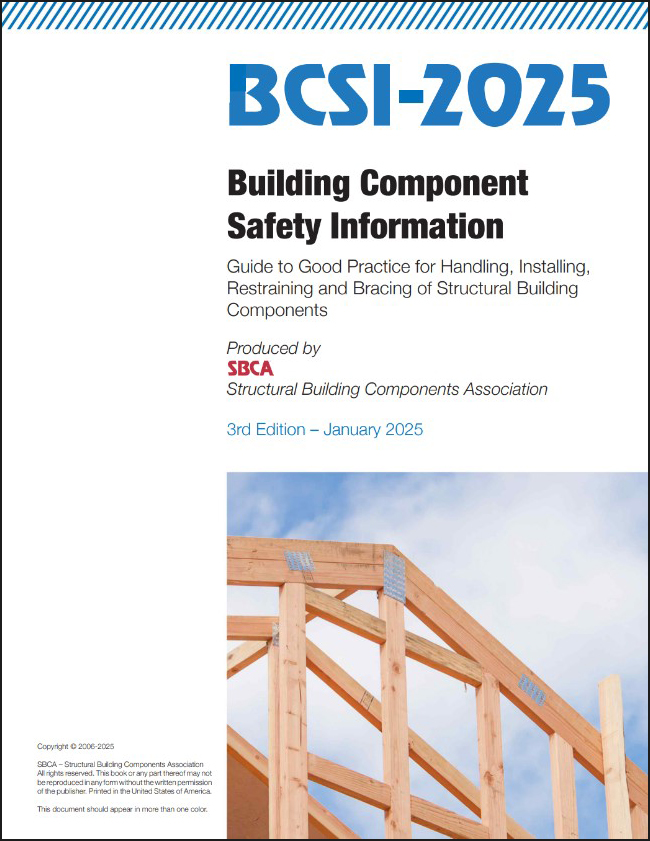
The BCSI-2025 guide and companion B-series Summary Sheets are valuable resources to assist with this, as well. These documents provide comprehensive prescriptive bracing options for both temporary and permanent conditions. The guide is full of graphics, tables, and text to ensure your project is both safe and code compliant. These can be ordered through SBCA at pubs.sbcacomponents.com.
Overall, the message is simple: don’t skimp on planning. Anytime you put in early, it will come back two-fold in crane time savings.

Chris Tatge is President of DC Materials, a Wisconsin-based company providing turnkey framing and lumber solutions for multi-family and commercial projects. With over 25 years in framing, he’s an industry innovator, speaker, and active leader within the NFC and SBCA.