
Renters Are Staying Longer, and It’s Changing BTR
Originally Published by: JBREC — September 18, 2026
SBCA appreciates your input; please email us if you have any comments or corrections to this article.
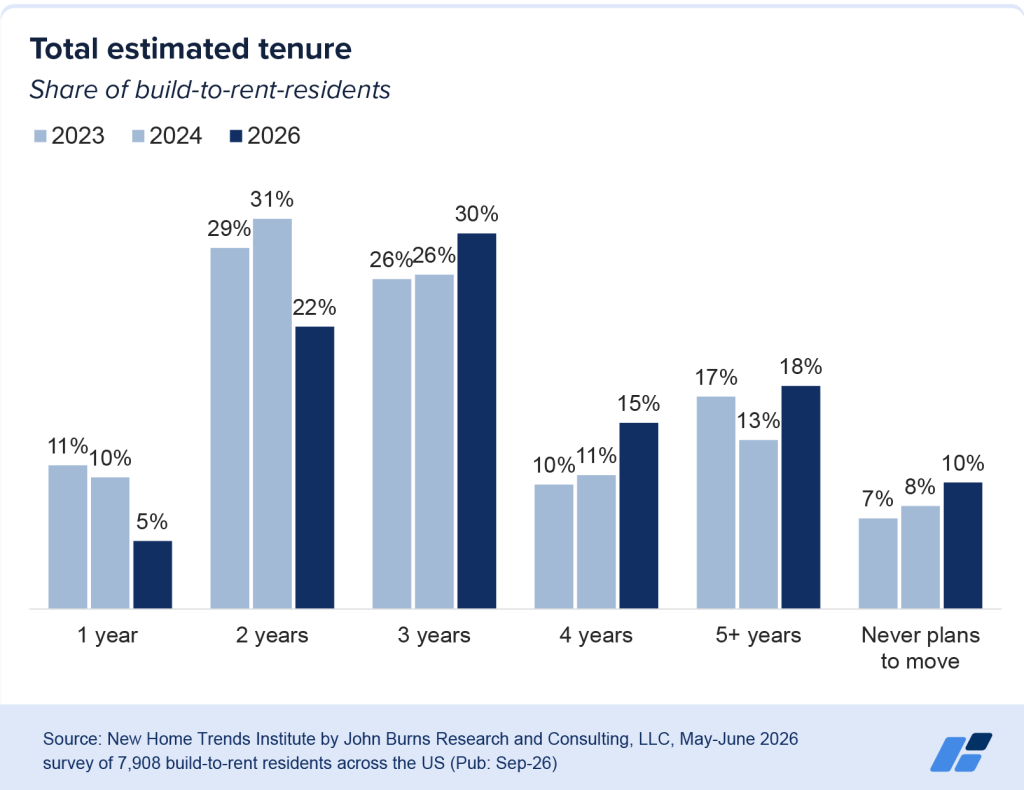
Our latest survey of nearly 8,000 BTR residents found that 73% now expect to stay in their current home for three years or more, up from 58% in 2024. At the same time, the share expecting to stay just one or two years fell from 41% to 27%.
Behind that shift are two very different renter stories, with different implications for operators.
Mature residents increasingly prefer to rent
More than half (55%) of Mature Singles and Couples now say they prefer to rent, up from 46% in 2024.
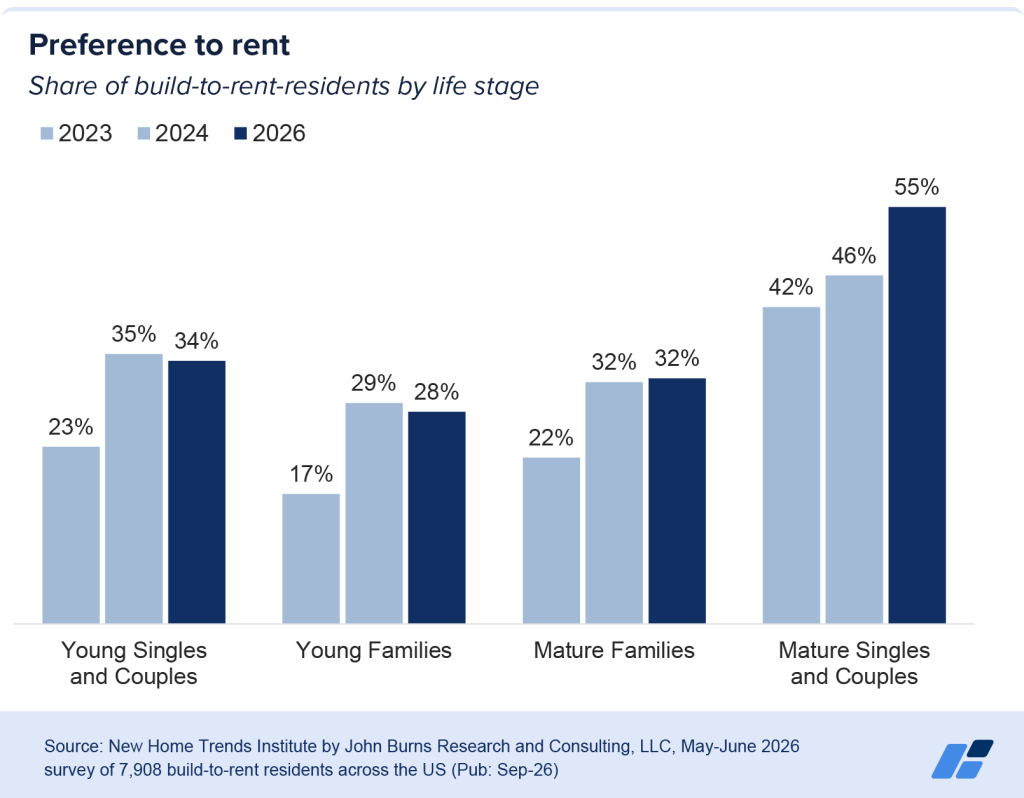
And once they find the right home, they tend to stay. Nearly half expect to remain in their current home for at least five years or never move, and 40% say cheaper rent alone would not be enough to get them to leave.
For operators, the opportunity is to get the product fit right for a resident who may be willing to stay for a long time: easier to live in, easier to maintain, and appropriately sized for households that may be trading down without wanting to feel like they are giving something up.
Younger households and families need more house now
Younger households and families are solving a different problem. Across those life stages, needing a bigger home and wanting a better neighborhood or location consistently rise to the top of the reasons they moved.
BTR lets them get the space and location they need now, even if the home they ultimately want to buy is still out of reach. A consistent message from our recent BTR Council meeting was that once someone moves into a dedicated BTR community, they often don’t go back to apartments.
Among residents who still expect to own or are undecided, 30% say their biggest hurdle is finding an affordable home in the area they want—more than twice the share who point to the down payment.
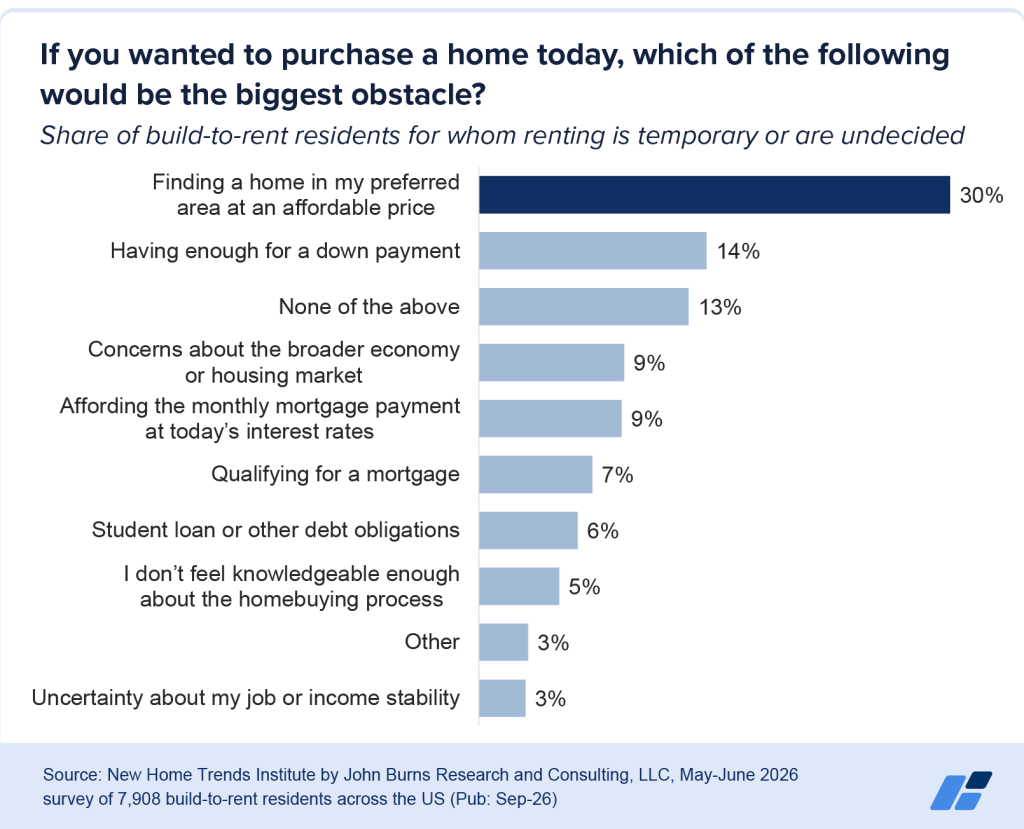
For operators, that puts a premium on delivering the space and location these households cannot yet get in the for-sale market. They may still want to own someday, but BTR can solve the housing need they have now, and potentially for several years.
How BTR operators should respond
1. Know your resident before committing to a product program. The groups that align their product mix with local demand will likely outperform those trying to apply a cookie-cutter approach across every site.
2. Underwrite to the longer stay. If more residents are staying three years or longer, reflect that in assumptions around turns, vacancy, and leasing costs rather than treating retention as a soft benefit.
3. Protect the resident experience. Communication and maintenance execution are worth getting right.
4. Spec for five years of wear, not eighteen months. Flooring, paint, hardware, storage, and other everyday-use decisions should reflect the possibility that the same resident may be living with them for years. Homebuilders entering BTR should also shift toward this long-term operator mindset. That is showing up in material choices and layout decisions, like positioning HVAC access points near the front door or in the garage to simplify maintenance.
Know which households your community is best positioned to serve, and make sure the product, positioning, and experience line up with what they are looking for.