
Speaking the Same Language
Strengthening Communication Between Component Manufacturers and Framers
BCMC 2025 Education Session: Speaking the Same Language
Speakers: Gil Capelini, Next Level Construction; Jacob Knott, Ace Carpentry, Inc.
Clear communication between component manufacturers and framers can make or break a project, and the BCMC & Framer Summit session, Speaking the Same Language, brought that reality into sharp focus. Moderator Tony Acampa, Design Team Lead at Shelter Systems Limited, led the discussion alongside Gil Capelini, Vice President at Next Level Construction, and Jacob Knott, Preconstruction Manager at Ace Carpentry, Inc.
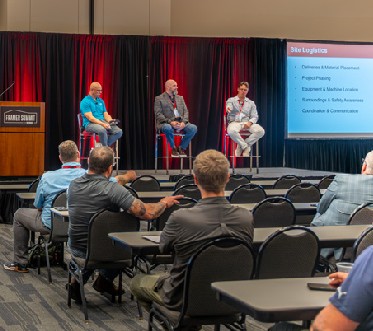
The panel discussed the common pain point of conflicting or missing information. Incomplete plans or assumptions made without confirmation often lead to rework, delays, and frustration on both sides. The speakers stressed that the phrase “I thought you meant…” is one of the most expensive sentences in construction. Verifying details, no matter how small, prevents misunderstandings that ripple through crews, schedules, and budgets.
Terminology differences were another major theme. Words that seem straightforward can mean something different depending on who is saying them. The panel walked through examples that regularly cause friction, including fire rated versus fire treated, blocking versus bracing, plywood versus OSB, and distinctions between flush beams and dropped beams. These are not theoretical differences; they have real implications for design intent, material selection, and installation. Establishing shared definitions early is one of the simplest and most effective ways to avoid confusion.
The speakers also addressed the tension between digital and verbal communication. While texts, emails, and shared platforms are efficient, they can never fully replace real-time clarification. Miscommunication frequently happens when a quick digital note is substituted for a short conversation. The panel encouraged attendees to balance both approaches: use digital tools to document decisions, but rely on direct communication to confirm expectations and resolve ambiguities.
To support better alignment, the panel highlighted resources available through the National Framers Council (NFC). Tools like the Protocol for Dimensioning a Wood Building help both sides operate from the same standards and reduce the guesswork from drawings and field instructions. QR codes were presented, and phones immediately went on around the room as attendees downloaded checklists and templates they could start using right away. The enthusiasm underscored just how valuable shared reference points can be.
The discussion then turned to jobsite logistics, an area in which miscommunication frequently strains the CM–framer relationship. Planning deliveries, staging materials, and sequencing work affects how efficiently framing crews can move through a structure. When materials are placed thoughtfully, when truss deliveries align with the framer’s workflow, and when equipment locations are coordinated in advance, productivity increases and frustration decreases. Several attendees were jotting down notes as the panelists walked through practical steps that improve jobsite flow with only minor adjustments in communication.
As the session wrapped up, the speakers returned to the core idea that tied the session together: bridging the communication gap between component manufacturers and framers through shared language, clear expectations, and understanding, is the key to success. Early coordination, shared documentation, and designated points of contact are simple habits that go a long way. But the deeper message resonated even more: CMs and framers ultimately want the same outcome. When both sides take the extra time to confirm, clarify, and communicate, they begin speaking the same language—and projects run better for everyone involved.